Kaiyue Rubber (Jingxian): Delivering High-Quality Rubber & Silicone Products for Industrial & Daily Applications Worldwide.
English


Views: 0 Author: Site Editor Publish Time: 2026-10-30 Origin: Site


In field applications, the operational reliability of any modern fluid power system hinges entirely on the structural integrity of its core components. Flexible piping acts as the primary vascular system for heavy machinery. It is constantly subjected to extreme internal pressure spikes, relentless mechanical vibrations, and aggressive environmental degradation. A sudden failure here does not just cause an annoying leak. It triggers extensive operational downtime, poses severe environmental contamination risks, and creates catastrophic safety hazards like high-pressure fluid injection injuries.
Procurement managers and mechanical engineers face a saturated global market. Identifying a manufacturing partner that consistently balances cost-efficiency with uncompromising material quality is a persistent challenge. Procuring a high-performance Hydraulic Rubber Hose is no longer just about meeting basic dimensional tolerances. It requires a deep technical evaluation of the vendor's extrusion technology, compounding expertise, and quality control protocols.
Quality as a Baseline: Prioritize vendors implementing documented quality control processes with recognized international certifications like SAE, EN, and ISO.
Technical Breadth: A competent supplier must offer a versatile catalog capable of handling everything from standard fluid return lines to extreme high-impulse environments.
Bespoke Engineering: Advanced production facilities should provide custom routing solutions to meet unique operational pressures and extreme thermal conditions.
Total Cost of Ownership: Move beyond the initial unit price. Meticulously assess typical lead times, minimum order quantities, and the depth of after-sales engineering support.
Recent shifts in heavy machinery design emphasize compact routing and higher operating pressures. Equipment manufacturers are forcing more power into smaller spatial footprints. Consequently, the demands placed on flexible fluid conduits have never been higher. While the industry is rapidly adopting predictive maintenance sensors and IoT-ready hydraulic systems, these digital advancements cannot compensate for a structurally compromised elastomer.
Forward-thinking procurement teams are moving away from purely price-driven purchasing. They are actively seeking vendors who integrate advanced polymer science with traceable production data. At this stage of the supply chain, buyers must recognize they are investing in a strategic engineering partnership. The right manufacturer directly impacts the bottom line by drastically reducing defect rates and extending the overall lifespan of the machinery.
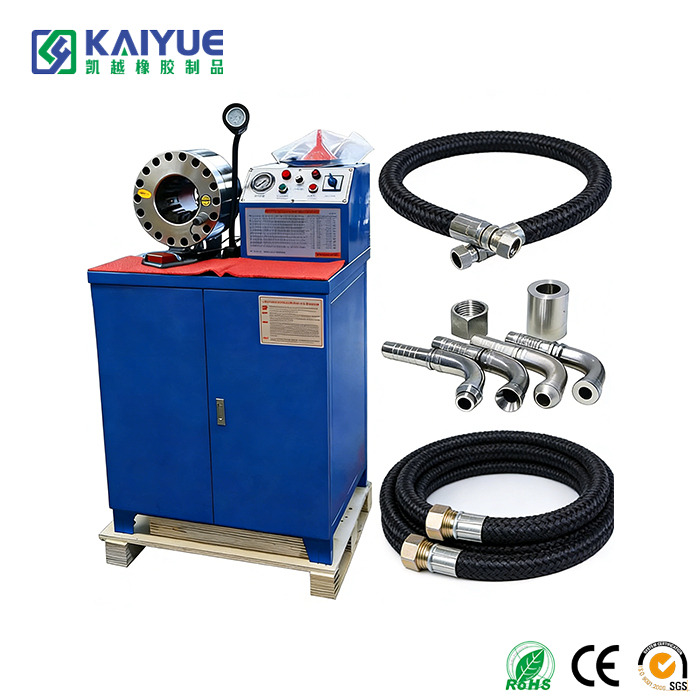
Utilizing substandard components in high-pressure circuits introduces severe operational liabilities. Low-quality elastomers are highly susceptible to premature ozone degradation and thermal hardening. This drastically increases the likelihood of sudden ruptures. The financial impact of a machine failure, emergency maintenance dispatch, and hazardous fluid cleanup always dwarfs the initial savings of purchasing unverified, low-cost parts.
Furthermore, supply chain stability is just as critical as the physical product. In an era of global logistical volatility, partnering with a fabricator possessing robust raw material sourcing protects your assembly lines from unpredictable delays. Consistent inventory and predictable delivery schedules ensure that maintenance operations remain entirely uninterrupted.
A competent manufacturer demonstrates technical maturity through a specialized and diverse product line. Standard assemblies cover routine applications, but specialized configurations are mandatory for extreme environments involving high abrasion or volatile chemicals.
When evaluating a supplier for standard fluid delivery circuits, engineers typically look for a highly reliable Single Wire Braided Hydraulic Hose. According to strict SAE 100 R1 AT and EN 853 1SN standards, these components must feature an oil-resistant synthetic rubber inner tube. They operate efficiently within a temperature range of -40°C to +100°C. The single layer of high-tensile steel wire braid provides the necessary structural backbone to prevent ballooning under pressure spikes.
In contrast, more demanding routing environments like air brake systems, power steering lines, or turbocharger oil supplies require a different architecture. A Steel Wire Reinforced Hydraulic Hose conforming to SAE 100 R5 specifications is often the required standard here. This specific construction utilizes a textile braided inner tube, reinforced by a single steel wire braid, and is finished with a robust textile braided outer cover. This unique layered design ensures exceptional flexibility while maintaining strict pressure containment.
To clarify the technical distinctions, refer to the core parameter comparison below:
Specification | SAE 100 R1 AT / EN 853 1SN | SAE 100 R5 |
|---|---|---|
Primary Application | Medium-pressure hydraulic lines, general fluid delivery | Air brakes, power steering, turbocharger oil supplies |
Inner Tube Construction | Oil-resistant synthetic rubber | Textile braided synthetic rubber |
Reinforcement Layer | One high-tensile steel wire braid | Single high-tensile steel wire braid |
Outer Cover | Weather and oil-resistant synthetic rubber | Textile braided cover |
Operating Temperature | -40°C to +100°C | -40°C to +100°C |
Beyond specialized fluid power applications, evaluating a vendor's broader extrusion expertise pays significant dividends. A facility capable of engineering a high-quality Industrial Rubber Hose for compressed air, water, or abrasive material transfer demonstrates a deep, foundational understanding of polymer science. This expertise translates directly into superior synthetic formulations across their entire catalog.
Standard off-the-shelf products frequently fail to accommodate the tight spatial constraints of modern compact machinery. A top-tier production partner must maintain an in-house engineering team capable of delivering Custom Hydraulic Hose Manufacturing. This complex process involves formulating bespoke rubber compounds for extreme thermal ranges, engineering specific bend radii, and designing outer jackets capable of withstanding aggressive mechanical friction. Rapid prototyping and rigorous in-house testing are strong indicators of a manufacturer's technical maturity.
The consistency of these products across large production batches relies heavily on factory floor technology. Modern extrusion lines equipped with laser micrometers ensure that the inner tube maintains precise dimensional tolerances down to a fraction of a millimeter. Automated high-speed braiding machines guarantee uniform wire tensioning, preventing the weak spots that lead to field failures.
Never commit to a high-volume bulk order based solely on polished specification sheets. Implement these strict vetting protocols to ensure supply chain integrity.
Empirical Sample Testing: Always request physical samples. Subject them to rigorous testing in your actual working environment or an independent laboratory to verify burst pressure and ozone resistance claims.
Virtual or Physical Audits: Request a live tour of the facility. Look closely for clean workflows, secure raw material storage, and the active presence of well-maintained automated extrusion machinery.
Total Landed Cost Analysis: Do not make decisions based strictly on the initial factory unit price. Factor in shipping logistics, historical defect rates, and the expected operational lifespan of the components to determine the true total cost of ownership.
Warranty and Support: Ensure the manufacturer provides a clear, written warranty policy. Understand the exact procedural steps for claiming defects and conducting root-cause failure analysis.
Selecting the right manufacturing partner is a highly strategic process requiring a systematic evaluation of engineering capabilities, material sourcing, and adherence to global testing standards. A reliable component is the literal lifeline of your industrial equipment. Compromising on foundational quality is never a viable long-term strategy.
By applying the rigorous evaluation criteria outlined in this guide, procurement professionals can secure a highly resilient and efficient supply chain. If you are looking to upgrade your fluid power systems with components engineered for absolute reliability, evaluate your operational parameters and explore the comprehensive, certified product catalog at Kaiyue Rubber to find the exact specifications your project demands.
Operational lifespan heavily depends on dynamic factors such as pressure fluctuations, ambient temperatures, and environmental stressors like UV exposure or physical abrasion. However, a premium component manufactured by a reputable supplier and operating strictly within its specified engineering limits can reliably last several years under demanding industrial conditions.
Catastrophic failures are typically caused by severe external abrasion, improper routing that violates the minimum bend radius, or extreme pressure spikes that exceed the designed safety factor. Additionally, prolonged exposure to temperatures beyond the elastomer's rating will cause the rubber to harden, crack, and eventually fail under load.
While preventative maintenance schedules vary by industry, visual inspections for weeping fittings, cover damage, or exposed wire should occur daily. For high-stress heavy machinery applications, proactive replacement is generally recommended every one to two years to prevent unexpected downtime.
Absolutely. Industry-leading fabricators routinely offer customized solutions. This includes developing proprietary inner tube formulations for unique chemical compatibility, adjusting wire braid counts for non-standard pressure requirements, and applying custom layline printing for OEM brand identity.
Objective verification requires proof of ISO 9001 certifications and strict adherence to SAE or EN manufacturing standards. Procurement teams should request absolute transparency regarding in-house testing procedures, including impulse cycle testing and burst pressure validation. Reliable manufacturers will always provide detailed third-party test reports alongside their physical product samples.


