Kaiyue Rubber (Jingxian): Delivering High-Quality Rubber & Silicone Products for Industrial & Daily Applications Worldwide.
English


Views: 0 Author: Site Editor Publish Time: 2026-10-28 Origin: Site


Imagine a bustling manufacturing floor suddenly coming to a screeching halt. The culprit is not a multi-million-dollar machine. It is a simple, overlooked fluid conduit that ruptured under pressure. I have seen single hose failures cause massive operational downtime, severe environmental spills, and critical workplace safety risks. Relying on guesswork for equipment procurement is an unacceptable liability in today's highly regulated facilities.
The industrial landscape is incredibly diverse and complex. Systems range from high-pressure earthmoving hydraulics to aggressive chemical processing plants. Buying the right equipment is never a one-size-fits-all process. Furthermore, the fluid power sector is currently undergoing a massive transformation. Stricter global emission standards and the rise of automated facility monitoring are forcing plants to upgrade their fluid routing systems. Modern procurement is no longer just about finding a tube to move liquid. Smart buyers are sourcing advanced material solutions designed for zero-leakage compliance, extended fatigue life, and seamless integration with predictive maintenance schedules.
This guide serves as your ultimate procurement resource. Designed specifically for facility engineers and technical buyers, we will explore the exact frameworks you need. We will detail specific material types, break down the renowned STAMPED method, and highlight application-specific solutions to ensure you make a confident, hazard-proof purchasing decision.
Use the STAMPED Method: Always evaluate Size, Temperature, Application, Material, Pressure, Ends, and Delivery before finalizing any purchase order.
Match the Hose to the Hazard: Specialized applications require highly engineered solutions. You must select nitrile-based tubes for petroleum transfers or ultra-high molecular weight polyethylene for corrosive acids.
Understand Reinforcement: High-pressure environments rely on reinforced architectural designs to prevent catastrophic bursting.
Total Cost of Ownership Matters: Proper storage, routine maintenance, and choosing a certified manufacturer upfront significantly extend equipment lifespan. This drastically reduces long-term replacement budgets.
An Industrial Rubber Hose is a highly engineered, flexible conduit designed specifically to transport fluids, gases, or solid materials across heavy-duty environments. Unlike standard commercial tubing, these robust products are manufactured to withstand extreme mechanical stress, harsh chemical exposure, and volatile pressure differentials.
Understanding the anatomy of these conduits is the foundational step in making an informed procurement decision. An industrial assembly typically consists of three primary layers. Each layer serves a distinct functional purpose. First, the innermost layer remains in direct contact with the conveyed media. This inner tube dictates the chemical and abrasion resistance. Second, the middle reinforcement layer provides essential structural integrity and shape retention. This layer usually consists of high-tensile steel wire or synthetic textile yarn. Finally, the outermost cover acts as a durable shield. It protects the internal architecture from environmental damage such as UV radiation, ozone degradation, and physical abrasion from rough concrete floors.
Selecting an incompatible component leads to severe operational consequences. When an inner tube degrades due to chemical incompatibility, it contaminates the entire fluid system. Inadequate pressure ratings inevitably result in catastrophic blowouts. This causes immediate production halts and places nearby personnel in extreme danger. By understanding these core components, buyers can proactively mitigate risks and ensure optimal system performance.
Engineers and procurement specialists globally rely on the STAMPED acronym as a standard evaluation checklist. This systematic approach ensures that every operational variable is accounted for before a purchase order is ever finalized. It eliminates dangerous guesswork from the equation.
Accurate sizing is critical for maintaining proper flow velocity and preventing sudden system pressure drops. Buyers must evaluate the Inner Diameter, which dictates the volume of media passing through. An undersized Inner Diameter creates excessive fluid velocity. This leads to heat generation and internal tube erosion. Additionally, the Outer Diameter is vital for routing the line through tight bulkheads or attaching proper clamps. The overall length must account for system movement and vibration absorption.
Temperature considerations demand the evaluation of two distinct metrics. Specifically, you must check the internal media temperature. This is the heat of the fluid or gas being conveyed. High internal temperatures can cause standard elastomers to harden, crack, or lose pressure resistance. Conversely, the external environmental temperature plays an equally vital role. Extreme cold renders rubber brittle. External heat sources, like engines or industrial furnaces, require specialized heat-resistant covers.
The application defines the physical environment and operational demands. Procurement teams must ask specific questions. Will the assembly be used for suction, requiring a rigid wire helix to prevent vacuum collapse? Will it be dragged across abrasive, debris-filled surfaces? Understanding whether the setup is subjected to constant flexing, severe vibration, or static installation dictates the required flexibility and cover durability.
The material of the inner tube must be completely compatible with the conveyed media. Transporting abrasive solids like sand or cement requires thick, wear-resistant natural rubber. In contrast, conveying aggressive industrial solvents demands highly specialized synthetic compounds to prevent swelling, dissolution, or cross-contamination.
Pressure ratings are arguably the most critical safety factor in the selection process. The Working Pressure represents the maximum continuous pressure the system will generate. The rated capacity must always equal or exceed this number. Furthermore, hydraulic systems frequently experience sudden pressure spikes during valve actuations. The reinforcement must handle these dynamic fluctuations. Burst Pressure serves as the ultimate safety margin. This is typically built at a four-to-one ratio for fluid power systems.
A fluid line is only as secure as its connection points. The ends, encompassing fittings and metal couplings, must match the system ports perfectly. Considerations include thread types such as NPT, BSP, or JIC. You must also decide whether the fitting should be permanently crimped or reusable. Incompatible ends are a leading cause of dangerous, high-velocity blowoffs.
Logistical requirements play a substantial role in modern procurement. This includes required testing protocols, such as hydrostatic proof testing. It also involves specific packaging for protection during overseas transit and material certifications. Aligning delivery lead times with scheduled facility maintenance ensures operations run smoothly without costly delays.
To bridge the gap between abstract concepts and practical procurement, I have compiled a quick-reference table. Use this to instantly match your operational hazard with the correct material architecture.
Conveyed Media | Recommended Inner Tube Material | Typical Industry Application | Primary Risk if Mismatched |
|---|---|---|---|
Hydraulic Fluids, Lubricants | Nitrile / NBR | Heavy Machinery, Excavators, Presses | Tube swelling, pressure blowout |
Corrosive Acids, Solvents | UHMWPE or PTFE | Chemical Processing, Tanker Transfers | Rapid degradation, toxic leaks |
Hot Water, Steam, Air | EPDM | Agricultural spraying, HVAC, Cleaning | Material hardening, cracking |
Abrasive Solids, Sand, Cement | Natural Rubber / SBR blend | Construction, Mining operations | Internal wall erosion, rupture |
The industrial sector utilizes a vast array of specialized fluid routing solutions. Identifying the correct category narrows down purchasing options significantly. This ensures the product matches the exact hazard of your workplace.
Fluid power systems transmit immense force through pressurized liquids. This requires conduits with exceptional structural integrity. A Hydraulic Rubber Hose is heavily reinforced, often utilizing multiple layers of braided or spiraled high-tensile steel wire. These are indispensable in heavy construction equipment, agricultural machinery, and industrial presses. Because a failure here can cause a massive excavator to drop its load instantly, superior impulse resistance and flexibility in tight routing spaces are mandatory.
When transferring petroleum-based products, standard elastomeric compounds fail rapidly. An Oil Resistant Rubber Hose is specifically formulated with a high-nitrile inner tube. This specialized material prevents the interior wall from absorbing hydrocarbons. Absorbed hydrocarbons cause severe swelling, softening, and eventual rupture. Refineries, fuel transfer stations, and automotive manufacturing facilities rely on these to prevent environmental disasters and protect workers from hazardous exposure.
Aggressive acids, potent alkalis, and industrial solvents require the highest level of material safety. A Chemical Resistant Rubber Hose utilizes advanced inner tube linings to safely handle highly corrosive media. By preventing degradation and leaks, these specialized lines ensure secure chemical processing, safe tank truck transfers, and compliant hazardous waste management.
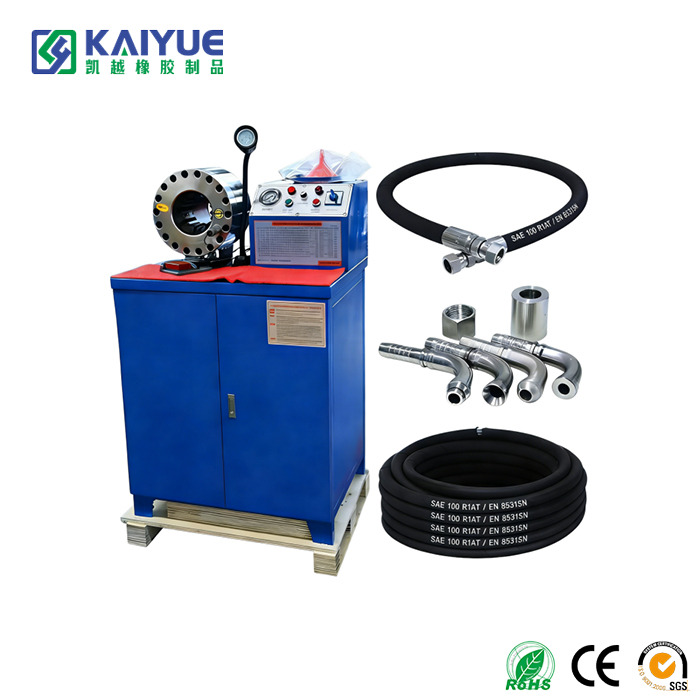
For systems requiring a delicate balance of moderate pressure handling and high flexibility, the Single Wire Braided Hydraulic Hose stands as an enduring industry standard. Often categorized under international specifications such as SAE 100 R1 AT or EN853 1SN, this specific architecture is a foundational component in fluid power routing.
The construction is optimized for versatility. The inner tube is typically constructed from oil-resistant synthetic rubber to ensure compatibility with hydraulic fluids and water-emulsion lubricants. It boasts an impressive working temperature range, typically from negative 40 degrees Celsius up to 100 degrees Celsius. Over this tube, a single, continuous layer of high-tensile steel wire is braided. This specific braiding technique provides significant burst resistance while allowing the assembly to bend and flex without kinking. Finally, an abrasion and weather-resistant synthetic cover protects the steel wire from moisture. This prevents rust and exterior physical damage.
In practice, buyers specify this braided variant for medium-pressure lines. It is frequently utilized in return lines on heavy machinery, agricultural tractor attachments, and material handling equipment like forklifts. In these scenarios, extreme high pressure requiring multi-spiral wire is not present, but durability remains paramount.
Procurement managers must understand the baseline properties of standard elastomeric compounds. This knowledge allows you to verify manufacturer recommendations and avoid premature equipment failure.
Nitrile, commonly known as NBR, is the industry standard for oil and fuel resistance. It exhibits excellent stability when exposed to petroleum-based fluids, diesel, and lubricating oils. While it forms the core of petroleum transfer lines, it generally has lower resistance to ozone and severe weathering compared to other compounds.
EPDM is renowned for its outstanding resistance to environmental factors. This includes ozone, UV radiation, and extreme weather fluctuations. It handles hot steam, water, and mild agricultural chemicals exceptionally well. However, EPDM is strictly incompatible with petroleum-based oils. Exposing it to these substances causes rapid, catastrophic swelling.
Neoprene is considered the ultimate all-purpose synthetic rubber. It offers a moderate, balanced level of resistance to oil, weathering, and physical abrasion. It is frequently utilized for the outer cover of industrial assemblies. It protects internal reinforcement layers from a wide variety of external environmental threats while maintaining excellent flexibility.
UHMWPE and PTFE represent the premium choices for chemical defense. They offer near-universal chemical resistance, capable of handling high-concentration acids and aggressive solvents safely. Because these materials are less flexible than standard elastomers, they are typically used as a thin interior lining supported by a robust, flexible outer structure.
Even with a solid grasp of materials and pressure ratings, buyers frequently fall into common procurement traps. These mistakes compromise overall system integrity.
Ignoring the minimum bend radius is a frequent and dangerous error. Every flexible line has a specified tightest curve it can achieve without internal damage. When an operator forces a line to bend beyond this limit to fit a tight bulkhead, it fatigues the reinforcement wire. It stretches the outer cover and kinks the inner tube. This restricts fluid flow and creates localized weak points that inevitably lead to ruptures.
Overlooking external environmental hazards is another major pitfall. Buyers often focus entirely on the internal media. However, a line carrying benign water will still fail rapidly if its outer cover is continuously exposed to welding sparks or harsh UV rays. Dragging equipment across abrasive concrete without a specifically engineered outer compound or protective sleeve guarantees a short lifespan.
Furthermore, mixing and matching fittings is a critical safety violation. Attempting to save costs by using couplings from one manufacturer with a hose from another disrupts engineered tolerances. Fittings and hoses are designed as matched systems with specific crimp diameters. Mismatched components are the leading cause of violent blowoffs under pressure.
Finally, choosing price over quality artificially inflates your Total Cost of Ownership. Low-cost alternatives often use inferior blends with high filler content. This leads to rapid degradation. The initial procurement savings are quickly erased by the exponential costs of frequent replacements, maintenance labor, and unplanned operational downtime.
Proper post-procurement handling is just as vital as the initial selection process. Implementing strict maintenance and warehouse storage protocols maximizes the return on your industrial investment.
Operators should conduct thorough visual and tactile pre-use inspections before pressurizing any system. Key indicators of impending failure include visible cracks or abrasions exposing the wire reinforcement. Bulges along the length of the cover indicate fluid has breached the inner tube. Additionally, any sign of slippage where the material appears to be pulling away from the crimped connection warrants immediate replacement.
Because elastomers degrade even when not in active use, procurement teams must ensure warehousing facilities adhere to standard storage guidelines. Inventory should be stored in a cool, dark, and dry environment. Protect inventory from direct sunlight. Keep it away from high-voltage electrical equipment or electric motors, as these generate ozone that rapidly cracks rubber. Coils should be laid flat on solid shelves rather than hung on thin metal pegs, which concentrates weight and causes permanent structural deformation.
Rather than employing a reactive run-to-failure strategy, modern facilities establish routine preventative maintenance schedules. These are based on application severity, historical data, and manufacturer guidelines. Proactive replacement during scheduled maintenance windows is exponentially more cost-effective than halting production for an emergency spill cleanup.
The final step in the buying process is properly vetting the supplier. A reliable manufacturing partner provides more than just a physical product. They deliver engineering assurance and operational peace of mind.
Ensure the manufacturer complies with recognized global standards such as SAE, EN, DIN, and ISO. These certifications guarantee that the product meets strict dimensional tolerances, pressure ratings, and material performance specifications. Beyond standard requirements, evaluate their customization capabilities. Industrial applications frequently require bespoke solutions. You may need custom cut lengths, specialized fitting assemblies, or unique compound blends tailored to specific environmental challenges.
Lastly, a reputable manufacturer will possess robust in-house testing facilities. Procurement managers should actively request quality assurance documentation. This includes burst testing to verify safety margins, impulse testing to simulate hundreds of thousands of pressure cycles, and ozone resistance testing to confirm outer cover longevity.
Procuring reliable fluid conveyance equipment requires far more than picking a standard size out of a catalog. By diligently applying the STAMPED evaluation method, verifying specific material compatibilities, and understanding dynamic pressure ratings, buyers can eliminate operational guesswork. Investing in the correct, specialized architecture fundamentally protects your workforce, preserves your expensive machinery, and secures your bottom line. Quality equipment is the ultimate defense against costly operational downtime. We encourage you to evaluate your current systems and source your next industrial fluid solutions directly from trusted experts. Visit Kaiyue Rubber to explore our comprehensive product catalogs, verify technical specifications, and find the exact industrial solution tailored to your facility's unique demands.
The replacement frequency depends heavily on the specific application, operating pressure, and environmental severity. High-stress hydraulic lines subjected to constant pressure impulses might require strict annual replacement. General-purpose water lines in benign environments can last for several years. Implementing regular visual inspections and adhering to a preventative maintenance schedule are the best ways to determine the actual safe lifespan of your equipment.
Absolutely not. Engaging in this practice is highly dangerous. The inner tube of a standard water assembly is typically made from EPDM or SBR, which are strictly incompatible with petroleum products and harsh acids. If exposed to hydrocarbons or aggressive solvents, the interior wall will rapidly swell, degrade, and eventually burst. You must always use a dedicated, material-specific conduit for hazardous transfers.
SAE and EN are strict international manufacturing and safety standards. When a product bears these markings, it guarantees that the conduit has been engineered and tested to meet precise technical specifications. This includes exact dimensional tolerances, minimum burst pressure ratings, and vital safety performance metrics required for global industrial compliance.
Working pressure is the maximum continuous safe operating limit that the system should generate during normal operations. Burst pressure is the absolute catastrophic failure limit determined during destructive laboratory testing. To provide a necessary safety margin for machine operators, burst pressure is typically engineered to be three to four times higher than the stated working pressure.
You must measure the Inner Diameter to ensure it matches your system's required fluid flow rate. Using a specialized nomogram chart helps calculate the exact Inner Diameter based on your pump's flow rate in gallons per minute and the recommended fluid velocity. Selecting a size too small restricts flow and overheats the system, while sizing too large reduces system pressure and efficiency.
Premature failures are rarely due to manufacturing defects. They are almost always caused by improper selection or poor routing. The most common culprits include exceeding the minimum bend radius, choosing an incompatible inner tube material for the fluid being conveyed, external abrasion from dragging, and subjecting the line to pressure spikes that exceed its designated working pressure.


