Kaiyue Rubber (Jingxian): Delivering High-Quality Rubber & Silicone Products for Industrial & Daily Applications Worldwide.
English


Views: 0 Author: Site Editor Publish Time: 2026-08-28 Origin: Site


Industrial fluid and air transfer systems fail primarily due to improper specification, not manufacturing defects. Selecting the wrong material for a specific chemical, thermal, or pressure environment leads to premature degradation, catastrophic blowouts, and environmental contamination. These failures cause unplanned downtime across manufacturing, construction, and agriculture.
Mitigating these risks requires a rigorous evaluation of elastomer properties, structural reinforcements, and application-specific demands. This guide breaks down industrial materials, specific use cases, and the technical criteria required to specify the correct assembly for your operational environment. We detail how to match core tubes to media, select the right reinforcement layers, and avoid common routing errors on the job site.
Material Compatibility is Non-Negotiable: The core elastomer (e.g., Nitrile, EPDM, Neoprene) must be chemically compatible with the transferred media to prevent swelling, hardening, or leaching.
Structural Design Dictates Function: Vacuum and suction applications require wire helix reinforcements to prevent collapse, whereas discharge applications rely on textile braids for pressure containment.
Routing Constraints Influence Material Choice: The inherent flexibility and vibration-dampening properties of rubber make it superior to metal in dynamic applications, provided the minimum bend radius is respected.
Define the exact operational parameters before evaluating materials. Guessing leads to system failure. Industry-standard specification relies on the STAMPED acronym. This framework forces engineers and technicians to account for every variable. You evaluate Size, Temperature, Application, Media, Pressure, Ends, and Delivery. Skipping any single step compromises the entire fluid transfer system. You must gather precise data from the field rather than relying on outdated equipment manuals.
STAMPED Element | Field Measurement Requirement | Failure Consequence if Ignored |
|---|---|---|
Size | Inner Diameter (ID), Outer Diameter (OD), Length | Flow restriction, excessive velocity, routing interference |
Temperature | Internal media temp and external ambient temp | Elastomer baking, cracking, or cold-weather embrittlement |
Application | Flexing frequency, environmental exposure, routing | Cover abrasion, fatigue failure, kink-induced blowouts |
Media | Chemical composition, concentration, state (gas/liquid/solid) | Tube swelling, leaching, rapid internal degradation |
Pressure | Maximum working pressure and dynamic spike potential | Catastrophic burst, reinforcement layer rupture |
Ends | Fitting style, thread type, attachment method (crimp/band) | Coupling ejection, slow leaks, galvanic corrosion |
Delivery | Testing requirements, packaging, certification standards | Regulatory fines, failed safety audits, installation delays |
Calculating precise Inner Diameter (ID) maintains fluid velocity. It also prevents system pressure drops. An undersized ID restricts flow and increases friction. This friction generates excess heat and forces pumps to overwork. An oversized ID reduces system responsiveness and adds unnecessary weight. You must measure the exact outside diameter (OD) to ensure proper fitting selection and routing clearance.
To properly size a fluid transfer line, follow these field steps:
Determine the required flow rate in gallons per minute (GPM) for your specific pump.
Identify the maximum allowable fluid velocity for your media (e.g., hydraulic lines typically max out at 15 ft/sec for pressure lines).
Use a standard fluid power nomogram to intersect the flow rate and velocity, which dictates the exact minimum ID required.
Measure the physical routing space on the machine to confirm the resulting OD will not rub against chassis components.
Evaluating temperature requires looking at two distinct metrics. You must measure ambient (external) temperature extremes. You also measure media (internal) temperature extremes. Heat degrades rubber compounds rapidly. It bakes the elastomers, reducing flexibility and pressure ratings. Cold temperatures make standard compounds brittle. Brittle covers crack under dynamic flexing. You must specify materials rated for the absolute maximum and minimum temperatures the system will experience.
Identifying external environmental threats ensures cover longevity. You must account for UV exposure, ozone levels, and physical abrasion. Lines dragged across concrete need thick, abrasion-resistant covers. Lines exposed to direct sunlight require ozone-resistant synthetic blends. You must also consider dynamic flexing requirements. Constant movement fatigues internal reinforcements if the material lacks sufficient elasticity.
Confirming chemical compatibility with the core tube prevents internal degradation. Abrasive slurries require thick, resilient gum tubes. Highly refined petrochemicals require specialized synthetic tubes. You must consult detailed chemical resistance charts. Match the specific concentration and temperature of the fluid to the elastomer rating. Even trace chemicals in a fluid mixture can attack an incompatible core tube over time.
Establishing Maximum Allowable Working Pressure (MAWP) dictates reinforcement requirements. You must account for system pressure spikes or surges. A system operating at 1,000 PSI may experience spikes up to 1,500 PSI during valve closures. The assembly must handle these dynamic impulses. Industry standards typically require a 4:1 burst-to-working pressure safety factor for standard industrial applications. Water jetting or extreme high-pressure systems may require higher safety margins.
Selecting compatible couplings ensures assembly integrity. You must match the crimp specifications to the exact dimensions. Internal gaskets and seals must match the fluid media. A mismatched gasket can fail even if the elastomer survives. You must choose between permanent crimped ends for high pressure and reusable banded clamps for low-pressure suction. Improperly installed ends remain the leading cause of catastrophic blowouts in the field.
Breaking down base elastomers clarifies common industry nomenclature. Manufacturers blend raw polymers with carbon black, plasticizers, and curing agents. These recipes create specific performance profiles. No single compound handles every industrial challenge. You must balance chemical resistance, thermal tolerance, and physical durability. Understanding these base materials prevents costly specification errors.
Nitrile provides excellent resistance to petroleum-based fluids, oils, and greases. Engineers specify Nitrile tubes whenever refined fuels enter the system. It prevents the core from swelling and restricting flow. High-acrylonitrile blends offer maximum fuel resistance but sacrifice some low-temperature flexibility. Low-acrylonitrile blends remain flexible in the cold but handle fuels less effectively.
Nitrile carries specific trade-offs regarding environmental exposure. It exhibits poor resistance to ozone, sunlight, and weathering. A pure Nitrile cover will crack quickly if left outdoors. Manufacturers solve this by wrapping Nitrile tubes in Neoprene or specialized blended covers. You must ensure the outer cover matches the external environment while the inner tube handles the oil.
EPDM delivers superior performance in outdoor environments. It handles steam, hot water, and mild chemical applications effortlessly. The molecular structure resists ozone attack, preventing surface cracking. You will find EPDM heavily utilized in agricultural spraying and industrial cleaning. It maintains flexibility across a wide temperature range, making it ideal for four-season outdoor deployment.
EPDM remains highly susceptible to degradation from petroleum products. You cannot use EPDM for oil transfer under any circumstances. Exposure to diesel, hydraulic fluid, or gasoline causes EPDM to swell massively. The tube becomes spongy, loses all structural integrity, and bursts under minimal pressure. You must strictly separate EPDM inventory from petroleum transfer applications.
Neoprene offers moderate resistance to both oils and weathering. It serves as an excellent general-purpose elastomer. Neoprene covers protect internal tubes from incidental oil splashes in mechanic shops. It also provides inherent flame retardance, making it valuable in mining and enclosed industrial spaces. You can rely on Neoprene for standard air and water lines.
Neoprene acts as a jack of all trades. It may be outperformed by specialized elastomers in extreme environments. It does not handle high-aromatic fuels as well as Nitrile. It does not handle extreme UV exposure as well as EPDM. You specify Neoprene when you need a durable, versatile solution that encounters multiple mild hazards rather than one extreme hazard.
Butyl offers exceptional gas impermeability. It traps gases effectively, making it ideal for specialized chemical transfers and high-temperature environments. Butyl handles corrosive acids and bases better than standard elastomers. It resists heat aging, maintaining its physical properties during prolonged thermal exposure. You use Butyl when permeation rates must remain near zero.
Gum rubber provides maximum abrasion resistance for dry bulk or slurry transfer. The soft, highly elastic nature of natural gum absorbs impacts from sand, gravel, and dry cement. Instead of gouging the tube, abrasive particles bounce off the resilient surface. Gum rubber fails quickly if exposed to high heat, ozone, or petroleum. You must restrict its use to abrasive, non-oily media.
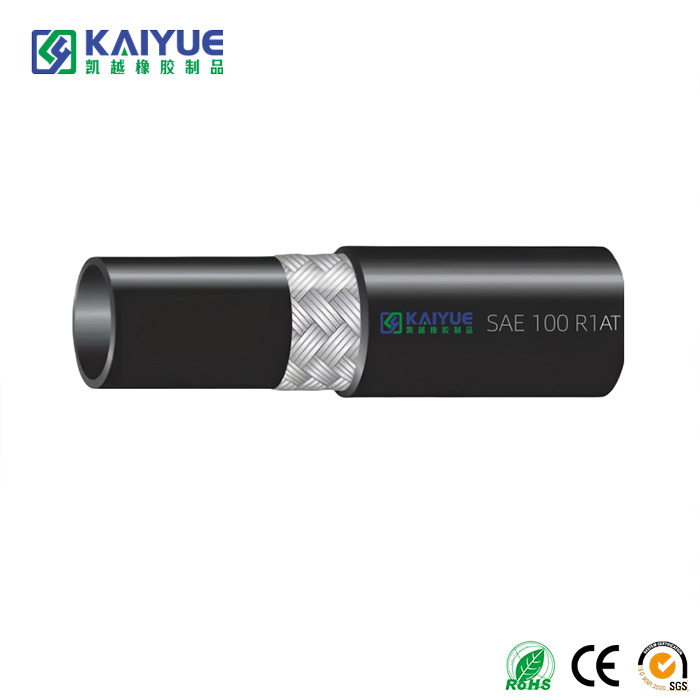
Aligning specific constructions with industrial use cases guarantees system longevity. You must match the reinforcement layers to the physical demands of the job. Textile braids handle expansion. Wire helices handle compression. The cover compound dictates external survival. We evaluate several high-demand sectors to demonstrate proper specification logic.
Transferring refined fuels demands strict material compliance. Specifying a petroleum transfer hose requires a high-grade Nitrile or specialized synthetic tube. This prevents fuel contamination and internal degradation. A degrading tube leaches rubber particles into the fuel, destroying downstream engines and filters. You must ensure the tube rating matches the specific aromatic content of the fuel being moved.
Tank evacuation requires structural rigidity. You must differentiate between standard drop applications and heavy-duty suction tasks. An oil suction and discharge hose includes a helical wire embedded in the carcass. This wire prevents vacuum collapse during high-speed tank draining. Without this wire, the pump suction flattens the tube, stopping flow and cavitating the pump. You must also meet API and USCG standards for dock and marine transfer operations.
Hydraulic systems rely on continuous, uncontaminated fluid flow. The critical role of an oil-resistant hydraulic suction and return hose cannot be overstated. These lines maintain reservoir levels without collapsing under pump suction. They utilize a helical wire reinforcement to maintain their shape. The Nitrile tube resists the hot hydraulic oil returning from the system actuators.
High-pressure hydraulic lines require different reinforcements. You must evaluate wire-braid versus spiral-wire construction based on system pressure impulses. Braided wire handles moderate pressures and offers good flexibility. Spiral wire handles extreme pressure spikes and severe impulses but remains stiffer. You must match the reinforcement style to the dynamic shock loads generated by the hydraulic cylinders.
Construction sites destroy fragile equipment. Heavy-duty water discharge and abrasive slurry lines require thick, abrasion-resistant covers. You must specify covers that survive being run over by machinery and dragged across rebar. Agricultural applications demand chemical resilience. EPDM or specialized cross-linked polyethylene (XLPE) lined tubes handle aggressive fertilizers and herbicides. These chemicals eat through standard water lines in weeks.
Automotive applications require precise molding and thermal tolerance. Formed coolant and heater lines utilize EPDM to handle boiling antifreeze and engine bay heat. They require high vibration resistance to survive constant engine movement. Fuel injection lines require specialized fluoroelastomer (FKM) veneers inside Nitrile tubes to handle modern ethanol-blended fuels under high pressure.
Industrial air systems present hidden chemical hazards. Selecting between heavy-duty materials for shop environments requires understanding the specific threats. Shop floors require thick covers to resist abrasion from concrete and metal shavings. Lighter polyurethane alternatives work well for overhead tool balancers but fail quickly if dragged across rough floors.
You must address the risks of oil carryover from air compressors. Piston compressors atomize lubricating oil into the air stream. This oil mist coats the inside of the air line. You must specify oil-resistant tubes even in standard air applications. Using an EPDM water line for compressed air leads to rapid internal swelling and eventual burst failures due to this hidden oil exposure.
Conceptual trade-offs between material families dictate system design. You must evaluate weight, flexibility, temperature limits, and chemical compatibility. No single material family solves every engineering problem. Understanding the physical limitations of thermoplastics and rigid metals helps you identify exactly when traditional elastomers provide the superior engineering solution.
Elastomers offer superior vibration dampening. A well-designed rubber hose absorbs pump pulsations and mechanical shocks. This reduces stress on adjacent system components like rigid pipes, valves, and manifolds. It isolates vibration, preventing metal fatigue in the surrounding infrastructure. You cannot achieve this level of mechanical isolation with rigid steel piping.
Routing flexibility saves installation time and space. Elastomers route easily over, under, and around obstacles. You bypass complex pipe fitting and welding requirements. You can accommodate moving machine parts and dynamic offsets. As long as you respect the minimum bend radius, these flexible assemblies provide clean, efficient fluid pathways through cramped industrial machinery.
Cold weather performance clearly separates elastomers from thermoplastics. Traditional elastomers maintain their flexibility in sub-zero temperatures. PVC becomes rigid, brittle, and difficult to uncoil when the temperature drops. A frozen PVC line acts like a solid plastic pipe, creating severe handling hazards for operators working outdoors in winter conditions.
Durability often outweighs weight considerations in heavy industry. Polyurethane and PVC are lighter and easier to handle for manual tasks. They work well for lightweight pneumatic tools. However, elastomers offer superior abrasion and heat resistance for heavy industrial use. Hot water washes, welding sparks, and heavy foot traffic destroy thermoplastic covers rapidly. Elastomers absorb this punishment and keep functioning.
You must identify the thresholds where elastomers fail. Extreme temperatures dictate a shift to metal. When fluid or ambient temperatures exceed 300°F (150°C), most standard elastomers degrade rapidly. Corrugated stainless steel assemblies handle temperatures exceeding 1000°F. You must transition to metal when dealing with superheated steam or extreme exhaust gases.
Highly aggressive chemical solvents also require metal or specialized fluoropolymer assemblies. Certain harsh solvents permeate through standard elastomers, creating hazardous vapor leaks. If you require an absolute permeation barrier for toxic or flammable gases, corrugated metal provides the necessary safety margin. You reserve metal for these extreme outliers due to its higher cost and reduced fatigue life under vibration.
Routing errors destroy assemblies faster than chemical incompatibility. You must avoid twisting the assembly during installation. Torsion reduces lifespan by up to 70%. Twisting separates the reinforcement layers from the core tube. You should use the printed layline on the cover as a visual guide. If the layline spirals around the assembly, you have introduced fatal torsion.
Follow these field-tested steps for proper installation:
Measure the exact distance between connection points, allowing an extra 2-4% length to accommodate pressure-induced expansion.
Align the fittings perfectly before tightening to ensure no twisting forces transfer into the carcass.
Use two wrenches during final tightening—one to hold the fitting steady and one to turn the swivel nut.
Verify the printed layline runs straight along the entire length of the installed assembly.
Route the line away from exhaust manifolds, sharp metal edges, and moving belts.
Bend radius violations create immediate weak points. Kinking restricts fluid flow and increases internal pressure. It stretches the outer cover and crushes the internal reinforcements. These compromised areas become highly susceptible to burst failures. You must calculate the minimum bend radius using the manufacturer's specifications. Use angled fittings to navigate tight corners rather than forcing the assembly to bend sharply.
External protection extends operational life in harsh environments. You should utilize protective sleeves or spring guards in high-abrasion areas. Nylon sleeves protect against rubbing and bundle multiple lines together safely. Steel spring guards prevent crushing and restrict bending beyond the safe radius. You apply these guards specifically where the assembly rubs against machine chassis or concrete floors.
Proper support spacing prevents sagging and excess weight on couplings. Fluid adds massive weight to the assembly. Unsupported spans place severe mechanical stress on the crimped ends. You must use proper saddles and clamps to support long horizontal runs. Never hang heavy assemblies vertically without specialized support grips. The weight of the fluid will eventually pull the tube right out of the coupling.
Establishing visual inspection protocols prevents catastrophic failures. Operators must check lines daily for cover cracks, blisters, and coupling slippage. A blister indicates fluid has breached the core tube and is trapped under the cover. Coupling slippage shows the crimp is failing. Any localized stiffness indicates heat damage. You must remove compromised assemblies from service immediately.
Implementing hydrostatic testing secures critical transfer lines. Visual inspections cannot detect internal reinforcement fatigue. You must pressure test chemical and petroleum transfer lines annually. Cap the ends, fill the assembly with water, and pressurize it to its test rating (typically 1.5 times the working pressure). Hold the pressure and inspect for leaks or abnormal expansion. Document these tests to maintain safety compliance.
Audit your current fluid transfer systems today for signs of premature wear, blisters, or cover cracking. Consult a detailed chemical compatibility chart to verify your existing core tubes match your transferred media. Engage with a certified assembler to finalize your specifications, select the correct crimp fittings, and establish a routine hydrostatic testing schedule. Replace any lines showing signs of torsion or coupling slippage immediately to prevent catastrophic field failures.
A: Suction hoses include a rigid helical wire embedded in the carcass. This wire prevents the tube from collapsing under vacuum pressure during tank evacuation. Standard transfer or discharge hoses only use soft textile braids. They contain internal pressure but will quickly flatten and block flow if subjected to vacuum forces.
A: You must consult the manufacturer's specific data sheet for the exact measurement. As a general rule of thumb, the minimum bend radius is often six times the inner diameter for standard lines. Bending tighter than this specification causes kinking, restricts flow, and permanently damages the internal reinforcement layers.
A: Premature hydraulic failures stem from four main culprits. Fluid incompatibility degrades the tube. Excessive heat bakes the elastomer until it cracks. Pressure spikes exceeding the maximum allowable working pressure rupture the reinforcements. Finally, improper routing introduces torsion, which tears the internal layers apart during dynamic machine movement.
A: Nitrile is absolutely mandatory for petroleum transfer. It resists oils, greases, and refined fuels effectively. EPDM is strictly incompatible with petroleum. If exposed to oil or fuel, EPDM will rapidly swell, lose its structural integrity, and fail catastrophically. Never use EPDM for any hydrocarbon transfer.
A: Yes, it is technically possible because the Nitrile tube resists compressor oil carryover. However, hydraulic lines are heavier, stiffer, and significantly more expensive than dedicated pneumatic lines. It is an over-engineered solution. You should only use it if severe oil carryover is destroying standard air lines and dedicated pneumatic options are unavailable.
A: Rubber maintains superior flexibility across extreme temperature ranges. PVC becomes rigid and brittle in cold weather, making it difficult to uncoil and prone to cracking. Additionally, properly compounded elastomers like EPDM offer exceptional UV and ozone resistance, outlasting PVC in direct sunlight without degrading.


