Kaiyue Rubber (Jingxian): Delivering High-Quality Rubber & Silicone Products for Industrial & Daily Applications Worldwide.
English


Views: 0 Author: Site Editor Publish Time: 2026-09-01 Origin: Site


Premature hose failure carries a hidden operational cost that extends far beyond the price of a replacement part. In industrial facilities, a burst line means unplanned downtime, halted production, and potential environmental hazards. In automotive applications, a failed coolant line rapidly escalates into catastrophic engine damage. Engineering and procurement teams frequently struggle to balance the higher upfront cost of premium materials against the long-term maintenance burdens of standard components. You might often question if premium materials represent a necessary upgrade or just unnecessary hype. Choosing the right material requires an objective, technical breakdown of material science, environmental tolerances, and lifecycle return on investment. You must evaluate exactly when to specify a traditional elastomer versus upgrading to a silicone alternative. This guide breaks down the performance metrics, degradation factors, and operational realities of both materials. We will help you align your component specifications with your actual system requirements.
Silicone generally outlasts rubber in extreme temperature fluctuations and high-flex environments, but carries a significantly higher initial procurement cost.
Modern EPDM rubber compounds offer highly competitive lifespans for standard applications and can last exceptionally long if the system is well maintained.
Fluid compatibility dictates material viability: standard silicone degrades rapidly when exposed to oil and fuel, making specific rubber compounds mandatory for these systems.
Hose degradation rarely stems from a single event. It usually results from cumulative exposure to environmental and operational stressors. Thermal cycling stands as the primary cause of polymer breakdown. As equipment heats up and cools down, the material expands and contracts. This constant movement fatigues the molecular bonds over time. In heavy machinery operating outdoors, these temperature swings can be extreme, shifting from freezing morning starts to peak operating temperatures exceeding 200°F within minutes.
External environments also play a massive role in lifespan. Ozone and ultraviolet (UV) exposure attack the outer cover of traditional elastomers. This exposure causes surface micro-cracking, often referred to as dry rot. Abrasive external environments further accelerate wear. Hoses rubbing against metal brackets, vibrating machinery, or concrete floors will physically wear through their protective covers. In mining or quarry operations, airborne silica dust acts like sandpaper against the outer jacket of the line, stripping away the protective layer and exposing the reinforcement braiding to moisture and rust.
To evaluate lifespan objectively, you must establish baseline metrics. Operating hours provide a more accurate measurement than calendar years. Mean time between failures helps track reliability across a fleet or facility. Visual degradation markers, such as surface cracking, swelling, or hardening, serve as early warning signs before a catastrophic blowout occurs. Field technicians should log these visual markers during routine inspections to build a predictive maintenance schedule rather than waiting for a failure.
Internal fluid chemistry directly interacts with the polymer structure of the hose. The fluids you transport—whether engine coolants, lubricating oils, volatile fuels, or compressed air—dictate the chemical resistance required. Modern industrial fluids contain complex additive packages designed to prevent rust or reduce foaming, but these same additives can aggressively attack incompatible polymers.
Polymers react differently to various chemical compounds. If a material is incompatible with the transported medium, its theoretical lifespan becomes irrelevant. For example, exposing standard silicone to petroleum-based oils causes rapid swelling. The material absorbs the oil, loses its tensile strength, and eventually ruptures under minimal pressure. Conversely, certain Organic Acid Technology (OAT) coolants contain specific corrosion inhibitors that can slowly degrade certain older rubber compounds from the inside out. Matching the internal chemistry to the correct polymer is the foundational step in ensuring longevity. You must consult the fluid manufacturer's compatibility charts before finalizing any material specification.
Routine system maintenance directly impacts the baseline longevity of any material. A neglected system will destroy even the highest-quality components. Timely coolant flushes prevent the buildup of acidic compounds that attack internal linings. As coolant ages, its pH level drops, turning it highly acidic. This acid eats away at the inner tube of the line, weakening the structure long before any external damage becomes visible.
Preventing fluid contamination is equally critical. Introducing the wrong fluid into a system, even in small amounts, can initiate chemical degradation. Mechanics topping off a coolant reservoir with unapproved fluids can inadvertently create a chemical mixture that attacks the elastomers. Proper maintenance of system pressure regulators also prevents pressure spikes that exceed the burst rating of the hoses. When you maintain the broader system properly, you maximize the natural lifespan of the installed components.
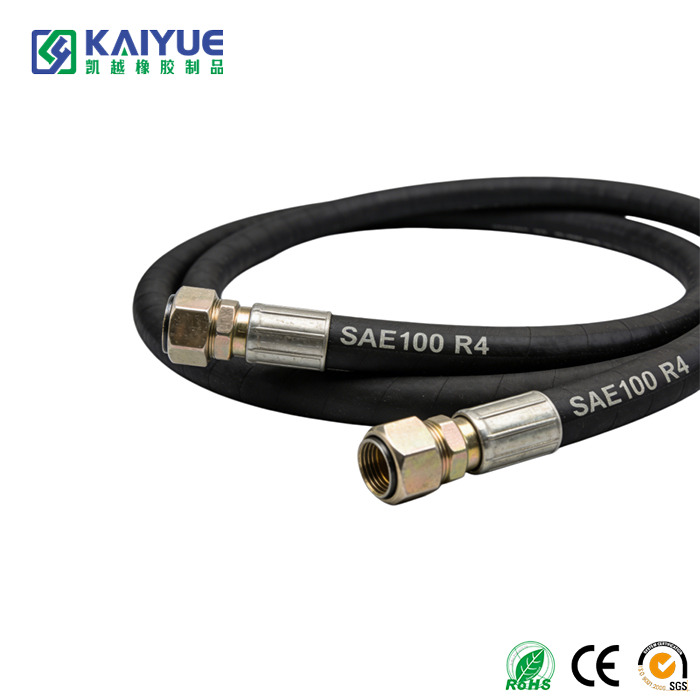
The term "rubber" covers a wide variety of synthetic elastomers. Each compound offers distinct advantages tailored to specific industrial environments. Ethylene Propylene Diene Monomer (EPDM) excels in weather resistance and handles water and glycol-based coolants perfectly. Nitrile, also known as Buna-N, provides excellent resistance to petroleum-based oils and fuels. Neoprene offers a balanced mix of moderate chemical resistance, good weathering properties, and flame retardance, making it popular in underground construction.
Modern manufacturing techniques have significantly improved these compounds. A standard rubber hose now features advanced curing processes and better carbon black dispersion. Carbon black acts as a reinforcing filler, improving tensile strength and UV resistance. Under optimal conditions, you can expect a modern EPDM component to last between 5 and 10 years. This lifespan assumes the operating temperatures remain within specification and the internal fluids remain clean and uncontaminated.
Traditional elastomers remain the superior choice for many heavy-duty systems. Any application involving petroleum products mandates specific rubber compounds. Oil coolers, fuel delivery lines, and power steering systems rely heavily on Nitrile or specialized fluoroelastomers. Silicone simply cannot survive in these environments without expensive modifications.
Pneumatic systems also benefit greatly from these materials. A smooth-surface rubber air hose provides excellent abrasion resistance on factory floors. It drags easily across concrete, metal grating, and gravel without snagging or wearing through quickly. These hoses deliver high performance for compressed air transport, where the extreme thermal properties of silicone are entirely unnecessary. The thick outer jacket of an EPDM or Neoprene air line absorbs impacts from dropped tools and heavy foot traffic, protecting the internal reinforcement layers from physical damage.
Despite manufacturing advancements, traditional elastomers possess inherent limitations. Aging rubber exhibits clear symptoms. Dry rot appears as a network of fine cracks on the outer cover. The material hardens over time, losing its natural elasticity. Once the material hardens, it can no longer absorb vibrations, transferring that mechanical stress directly to the fittings and clamps, which often leads to leaks.
Electrochemical degradation (ECD) represents a unique threat to coolant lines. The coolant can act as an electrolyte between different metal components in the engine, such as an aluminum radiator and a cast-iron engine block. This creates a galvanic reaction that attacks the hose from the inside. ECD causes internal striations and weakens the reinforcement layers near the connection points. Furthermore, exceeding maximum temperature thresholds exponentially accelerates failure. High heat bakes the elastomers, causing a rapid loss of flexibility and leading to brittle fractures under pressure.
Silicone polymers utilize a silicon-oxygen backbone, which is fundamentally stronger and more stable than the carbon-carbon backbone of traditional elastomers. This chemistry grants silicone an exceptionally broad operating temperature range. Standard silicone handles temperatures from -65°F up to 350°F, with high-temp variants exceeding 400°F.
This thermal stability means silicone maintains its elasticity over time. It actively resists the hardening and flexibility loss that plagues aging elastomers. Even after years of continuous high-heat exposure, a silicone component remains pliable. It will not bake, crack, or become brittle in the way traditional materials do. This sustained flexibility ensures a reliable seal and prevents vibration-induced fatigue at the connection points. Mechanics can remove and reinstall a five-year-old silicone line without it cracking, whereas a five-year-old EPDM line will often snap or tear during removal.
Silicone deployments make the most sense in environments where traditional materials fail prematurely. Heavy-duty coolant systems in commercial trucking, diesel generators, or high-performance vehicles benefit massively from this thermal stability. These engines generate massive amounts of heat under load, pushing standard EPDM to its absolute limits.
Turbocharger charge air coolers represent another ideal application. The compressed air exiting a turbocharger carries immense heat, often exceeding 300°F. Silicone easily handles these elevated temperatures while accommodating the engine movement and vibration. Any high-temperature fluid transport system where factory materials require frequent replacement is a prime candidate for a silicone upgrade. In industrial baking facilities or plastic injection molding plants, silicone lines transport high-temperature cooling water without degrading from the ambient radiant heat.
Silicone is not a universal solution. It carries critical vulnerabilities that you must account for during specification. The most notable limitation is high permeability. Silicone allows water vapor to escape through its walls at a higher rate than EPDM. In sealed coolant systems, this can lead to gradual fluid loss over an extended period, requiring more frequent top-offs. While the fluid loss is slow, maintenance teams must monitor reservoir levels more closely.
More importantly, standard silicone suffers catastrophic failure when exposed to petroleum-based fluids. Oil and fuel dissolve the polymer structure rapidly. To use silicone in oil-adjacent applications, the hose must feature a specialized fluorosilicone internal liner. This liner adds significant manufacturing complexity and cost to the final product. If a standard silicone line is mistakenly installed on a power steering or oil cooler circuit, it will swell to twice its size and burst within days.
When comparing degradation curves under continuous high-heat exposure, silicone clearly dominates. An EPDM component operating continuously at 250°F will slowly vulcanize further, becoming rigid. Once rigid, any engine movement or pressure spike can crack the material. The carbon bonds simply break down under sustained thermal load.
Silicone operating at the same 250°F shows virtually no change in its physical properties. It remains as flexible on day 1000 as it was on day one. In cold-weather performance, silicone also maintains its pliability well below the brittleness thresholds of standard elastomers. This makes it ideal for extreme winter environments or cryogenic adjacent applications where standard rubber would shatter like glass upon impact.
Installation ease matters significantly in tight engine bays or complex industrial machinery. Silicone’s inherent flexibility makes it easier to route around obstacles and slip over pipe fittings. It requires less physical force to install, reducing labor time and the risk of damaging the component during assembly.
However, modern elastomers also offer excellent mechanical properties. A flexible industrial rubber hose performs exceptionally well in absorbing system vibrations. Heavy machinery relies on these hoses to decouple vibrations between the engine and the chassis. While silicone remains flexible longer, a properly specified industrial elastomer provides robust vibration dampening without structural fatigue over a multi-year deployment. The heavier mass of a thick rubber line actually helps absorb low-frequency vibrations better than thinner silicone walls.
A common misconception is that the base polymer determines the pressure rating. In reality, both materials rely entirely on internal reinforcements for their burst pressure ratings. Manufacturers embed layers of aramid, polyester, fiberglass, or wire helix within the polymer walls.
The material choice impacts longevity and thermal tolerance, but the reinforcement dictates the pressure capacity. A multi-ply reinforced EPDM line can handle the exact same internal pressure as a multi-ply reinforced silicone line. You must specify the correct ply count and reinforcement material based on your system's peak operating pressure, regardless of whether you choose silicone or a traditional elastomer. For high-vacuum applications, a steel wire helix is mandatory to prevent the walls from collapsing inward, a feature available in both rubber and silicone variants.
Performance Feature | Traditional Rubber (EPDM/Nitrile) | Standard Silicone |
|---|---|---|
Temperature Range | -40°F to 250°F (varies by compound) | -65°F to 350°F+ |
Flexibility Over Time | Hardens and becomes brittle with heat aging | Retains original elasticity indefinitely |
Oil/Fuel Compatibility | Excellent (Nitrile/Buna-N specifically) | Poor (Requires specialized Fluorosilicone liner) |
Water Vapor Permeability | Low (Retains system fluid well) | High (May require occasional coolant top-offs) |
Abrasion Resistance | High (Tough outer cover handles friction well) | Low (Soft outer cover tears easily on sharp edges) |
Buyers frequently express skepticism regarding silicone components. They question whether the material is an unnecessary hype driven by aftermarket marketing or a vital upgrade for industrial reliability. The answer lies in your replacement frequency data.
If your facility replaces standard lines every three years due to heat-induced cracking, the upgrade is justified. You must model the operational analysis accurately. Buying standard components requires factoring in the replacement frequency. A silicone alternative boasts a longer lifespan and may last the entire lifetime of the equipment. If the equipment operates in a high-heat environment, the higher initial procurement cost of silicone pays for itself by eliminating the second and third replacement cycles.
Silicone’s lower ongoing maintenance requirements can heavily offset its higher initial cost. Standard components require regular physical inspections for dry rot, swelling, and hardening. Maintenance teams must squeeze the lines to check for internal degradation, feeling for soft spots or crunchy internal reinforcement.
You must also factor in the labor costs associated with system downtime. Replacing a coolant line requires draining the system, disposing of the old fluid, installing the new part, refilling, and bleeding the air from the system. This process consumes hours of labor. By installing a component that lasts the lifetime of the machine, you eliminate these recurring labor overheads entirely. The machine stays online, producing revenue rather than sitting in the maintenance bay.
Upgrading materials requires updating your hardware. Silicone is significantly softer than traditional elastomers. If you use standard worm-gear clamps, the slotted bands will bite into the soft silicone cover. As the system heats up and expands, the clamp will extrude the material through the slots, eventually cutting the hose and causing a leak.
You must implement specific mitigation strategies. Specify lined clamps, which feature a smooth inner band that protects the soft cover. For high-pressure applications, T-bolt clamps provide a wider, more even clamping force. Constant-tension clamps are the optimal choice, as they feature a spring mechanism that expands and contracts with the material during thermal cycling, ensuring a perfect seal at all temperatures. Failing to upgrade your clamps will negate any longevity benefits gained from switching to silicone.
Misapplication remains the highest risk when changing specifications. You must establish strict guidelines for avoiding standard silicone in oil or fuel applications. A single mistake during installation can lead to rapid component failure and severe equipment damage. Color-coding lines or using specific tagging systems can help maintenance crews identify which materials belong on which circuits.
Additionally, you must match the pressure ratings accurately. Deploying a low-pressure rubber hose in a high-pressure hydraulic system or a high-vacuum environment will result in immediate failure, regardless of the polymer used. Vacuum systems require wire-helix reinforcement to prevent the walls from collapsing inward. Proper specification requires looking at the entire operational environment, not just the base material.
Silicone objectively lasts longer and retains flexibility better in high-temperature, high-flex environments. It resists thermal aging and remains pliable long after traditional materials have turned brittle. However, traditional elastomers remain the mandatory, longer-lasting choice for petroleum-based fluid transport and high-abrasion environments.
Your shortlisting logic should follow a clear path. Default to EPDM or Nitrile for budget-conscious, standard-temperature, or oil-adjacent applications. Upgrade to silicone for extreme thermal environments, heavy-duty coolant systems, and situations requiring fit-and-forget longevity.
To implement these findings effectively, take the following next steps:
Audit your current system failure rates to identify components failing prematurely due to heat or flexibility loss.
Verify the exact chemical composition of all transported fluids to ensure strict material compatibility.
Consult manufacturer specification sheets to match the burst pressure and reinforcement layers to your peak operational loads.
Standardize your clamping hardware to include lined or constant-tension clamps before rolling out any silicone upgrades.
A: For standard daily-use applications operating within normal temperature ranges, modern EPDM components provide excellent longevity. Upgrading to silicone is generally unnecessary unless the equipment experiences extreme thermal cycling, frequent high-load operations, or a history of premature standard hose failures.
A: Yes. Traditional elastomers are highly susceptible to UV and ozone degradation, which causes the outer cover to dry out and crack. Silicone possesses exceptional natural resistance to UV rays and ozone, allowing it to survive prolonged direct sunlight exposure without surface degradation.
A: No. Standard silicone absorbs petroleum-based fluids, causing it to swell, lose structural integrity, and rupture. You must use Nitrile (Buna-N), specialized fluoroelastomers, or silicone specifically manufactured with a fluorosilicone inner liner for any oil or fuel applications.
A: Silicone has a softer outer cover than traditional elastomers. Standard worm-gear clamps have slotted bands that can cut into and extrude the soft silicone as it expands under heat. You must use lined clamps, T-bolt clamps, or constant-tension clamps to provide a smooth, even clamping force.
A: In a well-maintained system with regular fluid flushes and normal operating temperatures, a modern EPDM coolant line typically lasts between 5 and 10 years. Neglecting coolant maintenance or experiencing engine overheating will significantly reduce this lifespan.
A: ECD occurs when old coolant acts as an electrolyte, causing a galvanic reaction that attacks traditional elastomers from the inside out, leading to internal cracking. Silicone is naturally highly resistant to electrochemical degradation, making it immune to this specific type of internal failure.


